Quoting from photos: what to ask customers to send
A shot list per trade, from the boiler data plate and the fuse box to the roof from the street and the loft.
Contents
"Boiler's stopped working, how much to fix it?" There is no honest answer to that. Driving out just to look costs you a trip, and the job may not even be yours.
The right 3 photos often change that. Here is a shot list per trade, the jobs that still need a visit, and how to word a price you gave from photos.
What photos can tell you, and what they can't
The boiler example
Take that boiler. Ask for 3 photos (the data plate, the display and the pressure gauge), and you know the make and model, the fault code and whether the system has lost pressure.
Sometimes that is enough to quote. Almost always it is enough to put the right parts in the van.
A roof window carpenter on what changed
Oliver Dundiew, a carpenter who calls himself the "roof window rescuer", told the German trades paper Deutsche Handwerks Zeitung in 2018 how photos from customers changed his work (article in German, our translation).
Many of his jobs need the model code engraved in the sash of the roof window. He used to photograph it himself once he was at the customer's house. Now customers send that photo on WhatsApp before he comes.
"I'm better prepared for the appointments," he said. The long phone calls explaining how to operate the windows have gone too.
Where photos stop
A good photo answers questions about things you can see: the make and model, the code on a display, the size of a wall, the room around the boiler.
It says nothing about what is behind a wall or inside a flue, and it can't smell gas. A video with sound helps with noises. Nothing helps with hidden damp.
So photos tell you whether the job is yours at all, and they let you quote small, visible jobs straight from the conversation. For everything else they prepare the visit, so the first trip can also be the one where you fix something.
Rules for every photo request
The photos customers send on their own are often dark, blurry or have nothing in them for scale. A short shot list per trade fixes most of that, and these rules go into every list:
- One wide shot, one close shot. The wide one shows where the thing is, the close one shows the detail. A damp patch without the room around it is a puzzle.
- Something for scale: a tape measure pulled out along the wall or the floor, with the numbers readable.
- Flash off for labels and displays. A flash on a shiny data plate turns the text into a white spot. Daylight, or a phone torch held at an angle, works better.
- Video only where it adds something: a noise, a drip that comes and goes, a breaker that trips when the kettle goes on. 15 to 20 seconds with sound is plenty.
- Nothing that needs a tool, a ladder or a step onto the roof. If a photo would need a screwdriver, you take it yourself on the visit.
The shot list, trade by trade
Heating: boiler, furnace or heat pump
- The data plate (also called the rating plate). If it can only be seen with the casing off, ask for the brand and model name on the front instead.
- The display, with the error code or warning light as it shows right now.
- The pressure gauge, close enough to read the needle or the number.
- The whole unit with the pipes below it and the space around it, which tells you about access.
- A short video with sound if it bangs, whistles or keeps firing up and cutting out.
With the model and the fault code you can often tell whether this is a part you carry, a part you have to order or a case for the manufacturer's service.
A smell of gas ends the photo session at once. The customer needs the gas emergency number first.
Plumbing: leaks, taps, toilets, drains
- A wide shot of the room, then the spot where the water appears.
- Under the sink with the cupboard emptied, so the pipes and the trap are visible.
- For a leak from above: the ceiling stain, plus its distance from the nearest outside wall, so you can work out which pipe sits above it.
- The tap or toilet, with any brand name on it, and the label on the water heater if hot water is the problem.
- Where the main stopcock is. One photo now saves a search during the next emergency.
If water is coming through a light fitting, skip the photos and send the emergency steps from your website.
Electrical: fuse box, sockets, new circuits
- The fuse box (consumer unit or breaker panel) with its door open and the cover on, close enough to read the labels on the breakers.
- The faulty socket or switch, plus a wide shot of the wall around it.
- For new sockets, lights or a car charger: the fuse box, the spot where the new thing should go and the distance between them in metres or feet. A rough number from a tape measure beats "not far".
Scorch marks, a burning smell, a warm socket or anyone who got a shock means a visit, today if you can manage it.
With smoke, fire or an injured person, the customer calls the emergency services first.
Roofing: from the street and from the loft
- From the street: the whole roof, then the same slope zoomed in on the problem area. The other side of the road often gives a better angle.
- From the garden: the back slope, the gutters and the downpipes.
- From the loft, with a torch: the area above the stain, wet insulation, dark patches on the timber. With the torch off for a moment, any daylight coming through shows up.
- Inside the house: the ceiling stain with its distance from the nearest outside wall, so you can place it on the roof.
- For a roof window: the model code engraved in the sash, the photo Dundiew's customers send him.
Roof photos narrow the problem down and rarely settle it. Water can run along the timber before it drips, so the stain may sit some way from the gap.
Painting, plastering and tiling: the wall next to a tape measure
- Each wall straight on, with a tape measure pulled out along the floor or up the door frame.
- The height from floor to ceiling, measured and written in the message.
- Close shots of cracks, flaking paint, damp patches and the old tiles that have to come off.
- For outside work: the front of the house from the street and the access around it, such as a narrow side passage or where scaffolding could stand.
One room with clear photos and real measurements can often be quoted from the conversation.
Damp is the exception. Paint over it without finding the cause and the stain comes back.
When photos can't replace a visit
What homeowners are told
The German energy advice site co2online is blunt about this in its checklist for comparing quotes from tradespeople (in German).
For many jobs, the heating system for example, a tradesperson can only give a reliable quote after looking at the system and the house.
If someone names a flat price without having seen it, the checklist tells homeowners to rely on other quotes. The customer you are quoting may judge you the same way.
Jobs that need a visit
Book a visit when:
- The cause is hidden: damp, leaks inside walls or under floors, flat roofs.
- The job is big: a new bathroom, a heating replacement, a rewire, a new roof.
- Safety is involved: gas, scorch marks, cracks in load bearing walls, asbestos or lead paint in older buildings.
- The photos and the description don't match. "A small crack" next to a gap you could put a finger in means you go and look.
For these jobs the photos still tell you whether the trip is worth making and what to bring.
Word the photo quote so it holds up
Say what the price rests on
A price based on photos is only as good as what the photos showed, so say that in the quote. Two lines do it:
- What the price is based on: "Based on the 4 photos you sent on 12 March: replace the cartridge in the kitchen mixer tap, parts and labour, [price]."
- What would change it: "If the isolation valve under the sink is seized, replacing it adds [price]."
The rules on estimates, with Germany as an example
The rules on estimates depend on the country. Two examples from Germany:
- Under § 632 (3) BGB, the customer doesn't pay for a cost estimate (Kostenanschlag) unless that was clearly agreed.
- Under § 649 BGB, if the work can't be done without going substantially over an estimate whose accuracy you didn't guarantee, the customer may cancel.
If the customer cancels, you are paid only for the work done plus expenses (§ 645 (1) BGB). You must warn the customer without delay once you expect the overrun.
Rules in the UK, the US or Brazil differ, so check them where you work. This is general information, not legal advice.
Keep the photos with the job, not in your camera roll
On a personal WhatsApp, a customer's boiler photos sit between your family pictures, and nobody else in the business can see them (more on that in WhatsApp Business with multiple employees).
Photos in the customer's conversation
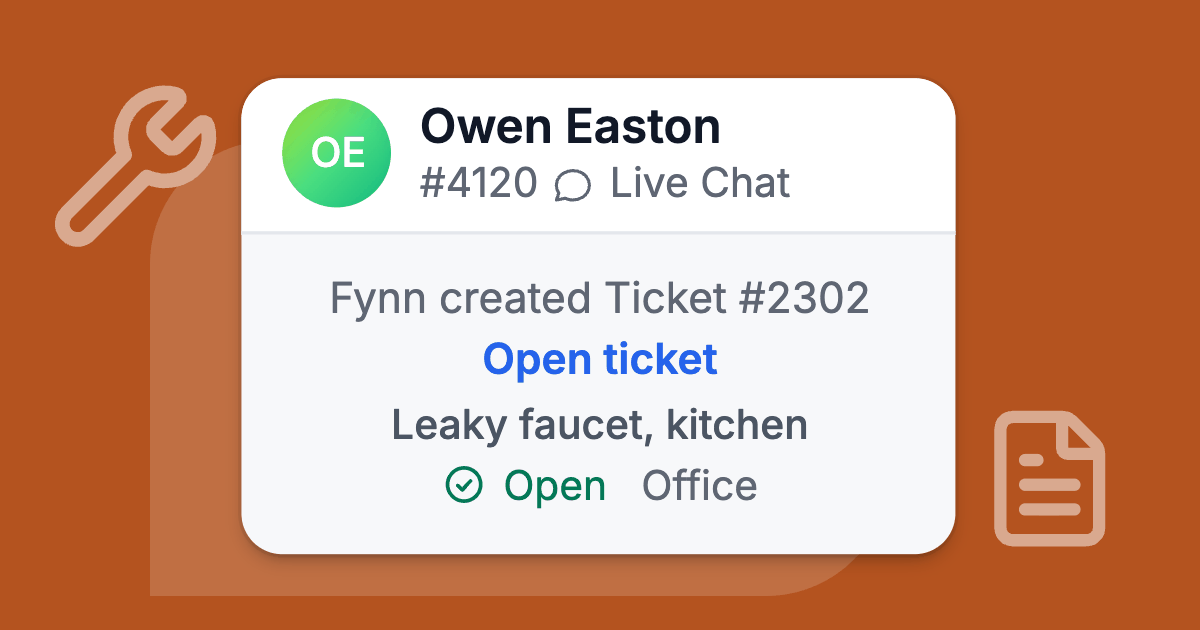
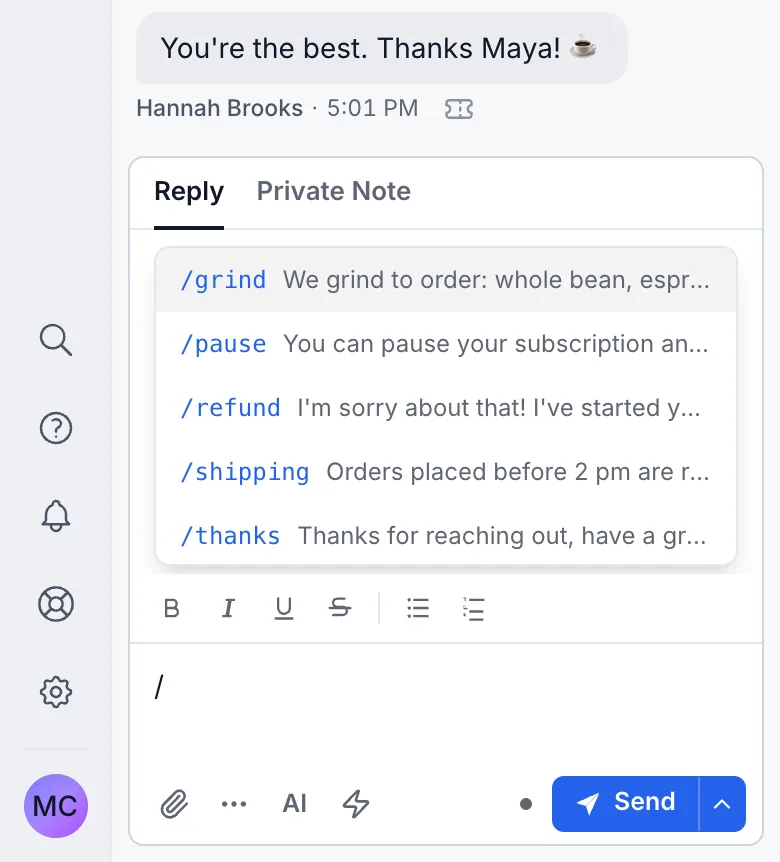
Deskwoot keeps them with the job (Deskwoot for trades). Photos and videos from WhatsApp, Telegram, email or your website chat land in that customer's conversation, where your team sees them.
- The website chat takes files up to 5 MB, often too small for a phone video, so ask for videos on WhatsApp.
- Pull in whoever prices the job with a private note and an @mention. Customers never see notes.
- Save each shot list as a canned response. Type /boiler and the whole list drops into the reply.
- Reply from the app with your own photo of the valve you mean (replying in the app).
- Photos stay in the history for 180 days on Startup, 365 on Business and without limit on Enterprise.
Fynn asks the first questions
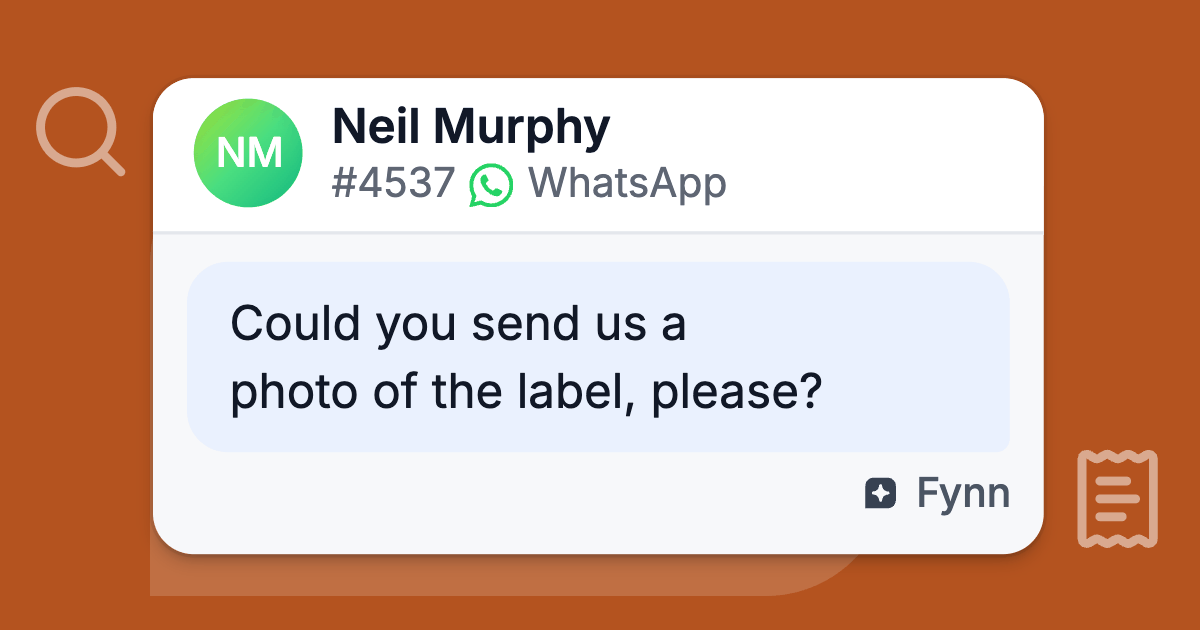
Fynn, our AI assistant, takes the first questions when nobody has a free hand. Set up for trades, it collects the address or postal code, a short description, suitable days and a phone number or email, then hands over to your team.
Add your shot list to its instructions under Settings > Bots and it asks for the photos too. It can't see them, though, and never judges a photo or confirms a price for new work. Reading photos is on our roadmap, as something you would have to allow.
If a visit is needed, Fynn can offer times from a connected Outlook calendar (how Fynn books appointments).
What it costs
- Fynn and canned responses start on Startup: $4 per agent a month, or $3.20 billed annually.
- 50 AI conversations a month included, then $0.07 each from a prepaid balance.
- The free Hacker plan has neither (see all plans).
Sign up, save one shot list as a canned response and send it in your next reply. New workspaces get 7 days of Enterprise without a card, for up to 30 seats including yours, then pick a plan or stay on the free Hacker plan.
Start with one list
Pick the job you get asked about most. Write down the 4 or 5 photos you always end up asking for anyway, save them where you reply, and send them in your first answer to every new request of that kind.
After a month, count how many of those jobs you quoted without driving out.
Also available in:DeutschEspañolFrançaisPortuguês (Brasil)